And Donald Trump may understand it best.
One of the biggest mistakes Americans make about China is assuming Beijing thinks about energy the way American progressives do.
It does not.
China is not replacing national power with climate idealism. It is using climate policy as an industrial strategy. It builds solar panels, batteries, electric vehicles, wind equipment, rare-earth magnets, and critical mineral supply chains at staggering scale. But it also burns coal, builds factories, secures minerals, subsidizes manufacturing, and keeps its eye fixed on hard power.
That is the part many Democrats still do not seem to understand.
For years, the progressive energy vision has treated “clean energy” almost as a moral category. Wind and solar are good. Oil, gas, coal, pipelines, refineries, and drilling are bad. The problem is that the world does not run on vibes. It runs on power, minerals, manufacturing, shipping lanes, refineries, and grid reliability.
China understands that perfectly.
The International Energy Agency says China invested more than $625 billion in clean energy in 2024 and reached its 2030 wind and solar capacity target six years early. So it would be wrong to say China is not serious about clean energy. It is very serious. But China’s seriousness is not sentimental. It is strategic. It wants to dominate the industries other countries are mandating.
At the same time, China remains the dominant player in global coal markets. The IEA says China consumes more coal than the rest of the world combined, and its power sector alone accounts for roughly one-third of global coal consumption.
That is the whole story in miniature. China sells the clean-energy future to the world while keeping the energy backbone needed to power its own industrial machine.
Republicans may be better positioned to see this clearly because they are less emotionally invested in the climate narrative. Their instinct is usually more pragmatic: produce American energy, protect American industry, rebuild supply chains, keep prices down, and do not hand strategic chokepoints to Beijing in the name of saving the planet.
That does not mean every Republican energy policy is perfect. It does not mean Democrats are intentionally helping China. But it does mean the Republican critique has a serious point: if America shuts down its own energy advantages while becoming dependent on Chinese-dominated minerals, batteries, solar panels, and refining capacity, it is not becoming greener. It is becoming weaker.
Rare earths are the warning sign. CSIS reported that China’s 2025 export restrictions on heavy rare earths and permanent magnets disrupted allied defense and industrial supply chains, exposing how dependent the West still is on Beijing.
This is not theoretical. These materials are used in weapons systems, vehicles, electronics, batteries, and advanced manufacturing. If China controls the supply chain, China controls leverage.
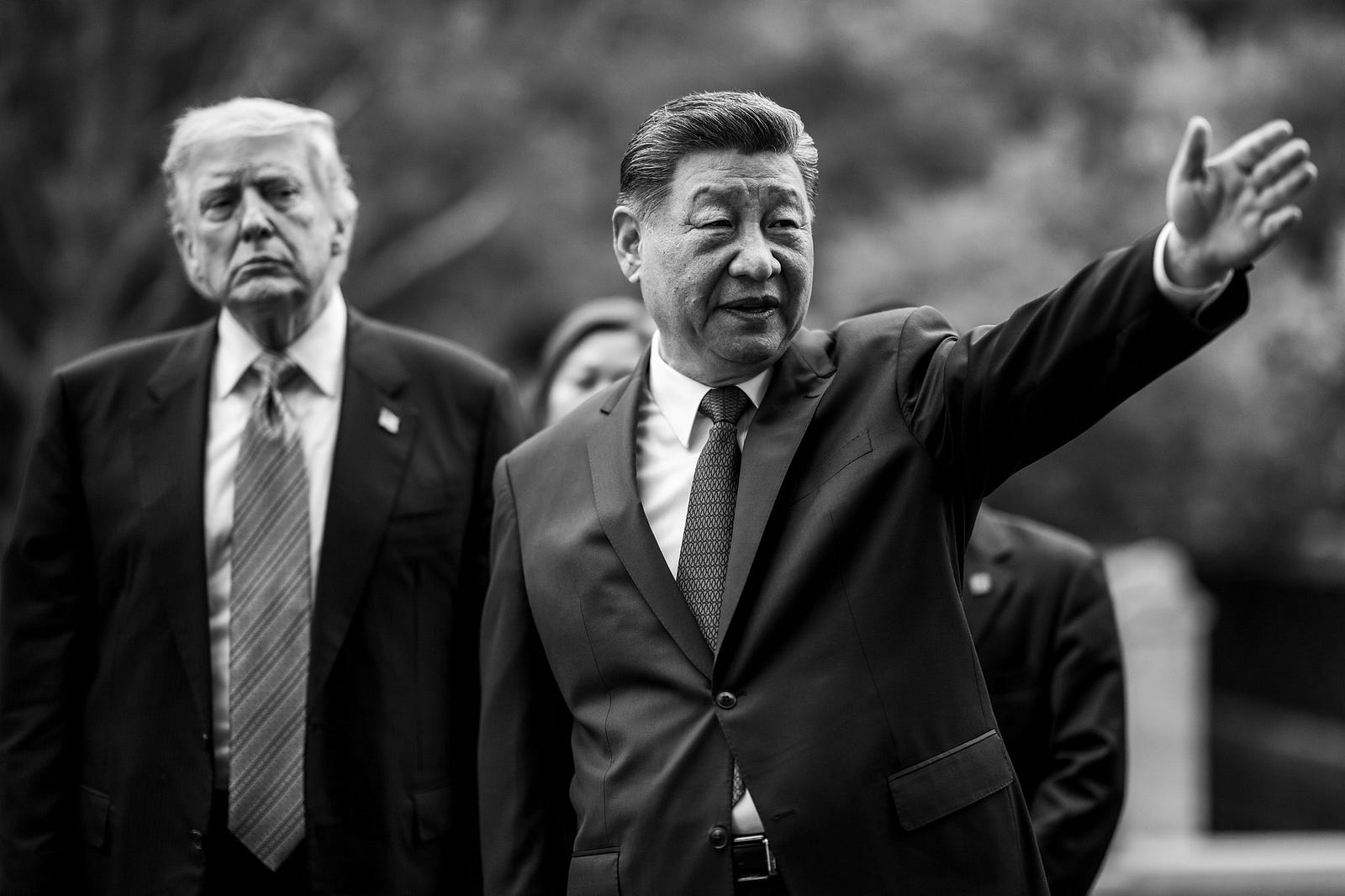
That is why Trump’s approach may be unusually suited to this moment. He is not especially vulnerable to the usual diplomatic theater from the Chinese Communist Party. He does not appear embarrassed by confrontation. He is willing to use tariffs, sanctions, public pressure, market access, and strategic bargaining in ways more conventional politicians often avoid.
The White House says the recent Trump-Xi summit produced Chinese commitments on agriculture, Boeing aircraft, trade boards, rare earths, and critical minerals. Those claims still need follow-through. China has a long history of saying one thing in summit language and doing another in practice. But the direction of the pressure is important. Trump is trying to force China to bargain over chokepoints instead of simply accepting them.
The FBI has warned for years that China’s counterintelligence and economic espionage efforts are a grave threat to America’s economic well-being and democratic values. Energy policy has to be understood inside that larger threat picture.
The real question is not whether America should have cleaner technology. Of course it should. The question is whether America is building that future on American strength or Chinese dependency.
Republicans are often mocked for being backward on energy. But on China, their skepticism may look less backward than realistic. Beijing is not playing a climate game. It is playing a power game.
America should notice.
(Contributing writer, Brooke Bell)